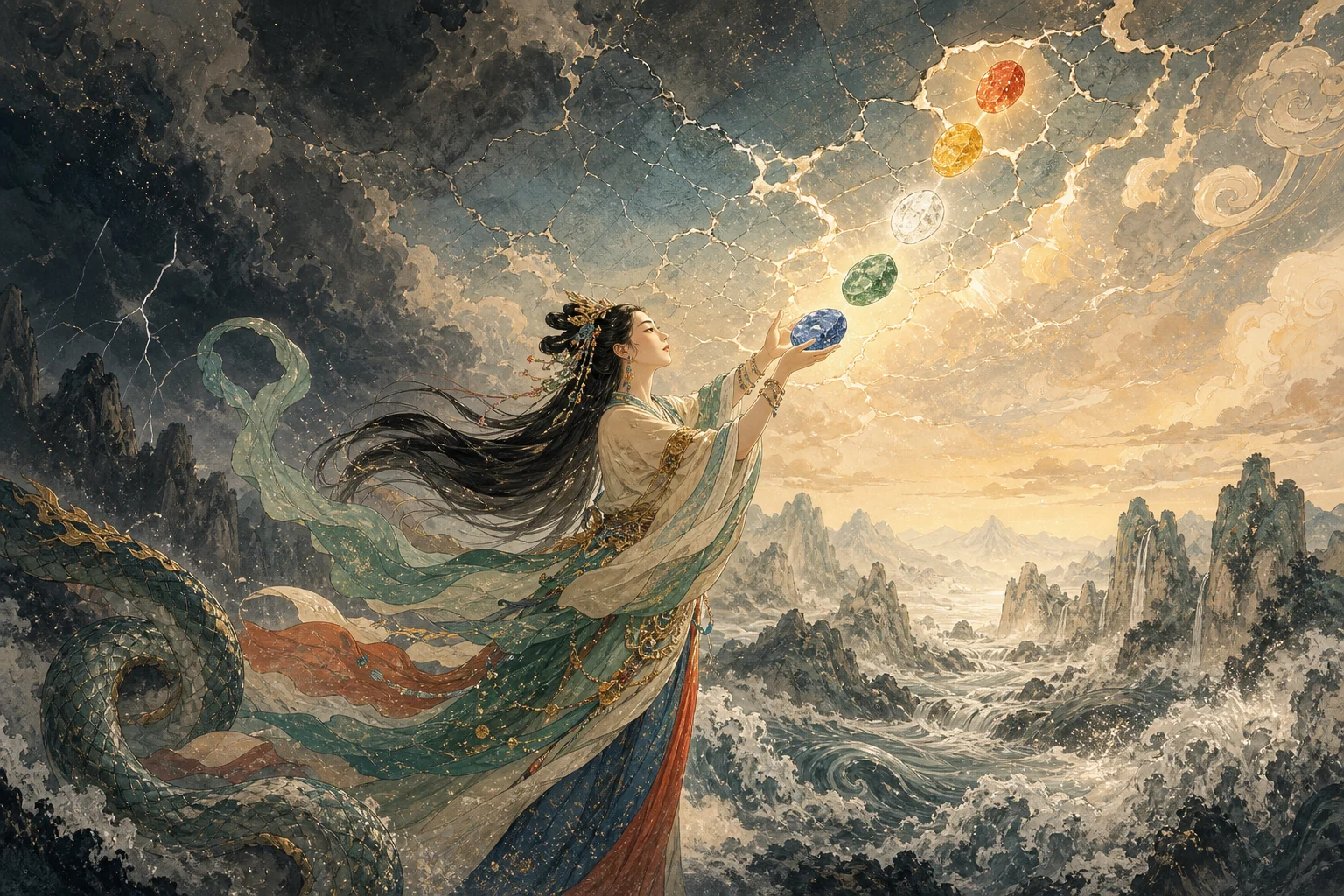
In stories associated with Nüwa, creation is not a finished event. The world can break, and when it does, it must be repaired. After a catastrophic struggle, the pillars of heaven are damaged, the sky tilts, fires spread, and floodwaters rise. The orderly space in which human life depends has become unstable.
Nüwa responds as a maker. She melts stones of five colors to patch the torn sky, cuts the legs of a great turtle to support the four directions, and restores balance to the damaged land. Different versions arrange these deeds differently, but all emphasize deliberate, difficult work.
The meaning of the five colors
The five-colored stones are often pictured as brilliant jewels, yet their importance is not merely decorative. Fivefold patterns recur throughout Chinese thought as ways of mapping directions, phases, tones, tastes, and other systems of relation. In the myth, plurality becomes the material of wholeness: the sky is repaired not by one perfect substance, but by many colors brought into harmony.
Nüwa is also remembered in traditions about the creation of humanity and the institution of social order. These roles make her both cosmic and intimate—a being concerned with the architecture of heaven and with the fragile lives beneath it.
Creation as care
Where Pangu's story imagines a body becoming the world, Nüwa's story imagines divinity as repair. Its central action is neither conquest nor escape. It is care under pressure: gathering materials, understanding what has failed, and restoring conditions in which life can continue.